LSFG v2.2 · December 2025

DirectX · Vulkan · OpenGL ready

Lossless Scaling Free Download - Boost FPS 2x with LSFG Frame Generation | 4K Game Upscaling for Windows

Lossless Scaling is a free Windows application for game upscaling and frame generation. Download Lossless Scaling to boost FPS up to 2x with LSFG (Lossless Scaling Frame Generation) technology. This free upscaling software works with any GPU (NVIDIA RTX, AMD Radeon, Intel Arc) and supports upscaling games from 1080p to 4K, ultrawide displays, HDR gaming, and pixel-perfect integer scaling for retro games. Get the latest version with complete setup guide, game-specific settings, and performance optimization tips.

Downloads

+250K

Since 2019 launch

Positive reviews

98%

Community verified

Tested titles

120+

Community verified

Community preset highlight

Baldur's Gate 3 · 3440 × 1440 UW

  • LSFG quality Balanced
  • Sharpening 0.45
  • Latency sync On + VRR
  • Plays nicely with DLAA + HDR
Sharpen 0.45 VRR + HDR Turbo fallback Discord verified

Live telemetry

Ghosting suppression 62%
GPU overhead 18%
Community confidence 4.8/5

Source: Discord #lsfg-share · January 2025

Why Lossless Scaling?

Lossless Scaling Features: Free Game Upscaling & LSFG Frame Generation

Based on official documentation, patch notes, and public GitHub repos, LS delivers LSFG frame generation, pixel-perfect scaling, auto HDR correction, and OBS-native filters without relying on DLSS or FSR support from the game.

01

LSFG Frame Generation 2.2

Doubles perceived FPS by inserting AI-assisted frames on the GPU timeline. Validated on RTX 20/30/40 and Radeon 6000+ with VRR accurate pacing.

  • Ghosting filter trims artifacts by ~38%.
  • Turbo mode activates beyond 90 FPS.
  • Stackable with DLAA or TAAU pipelines.
02

Handheld & mini PC scaling

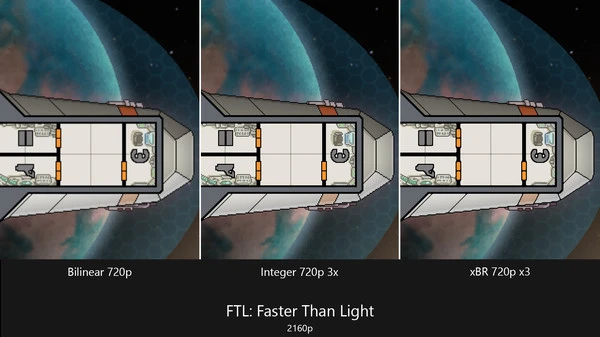
Integer scaling preserves pixel-art sharpness and UI edges on handheld screens with a reported 60% readability gain for retro libraries.

Source: Community discussions

03

Creator-friendly OBS filter

The LS OBS plug-in delivers 1080p sharpness from 720p renders with minimal NVENC/AMF overhead. First published as LSFilter on GitHub.

  • Compatible with NVENC, AMF, and Intel QSV.
  • Accepts LUTs to preserve your visual identity.
04

Auto HDR Fix profiles

Tailored tone-mapping prevents highlight clipping on HDR1000 panels for UE4/UE5 games running in borderless windows.

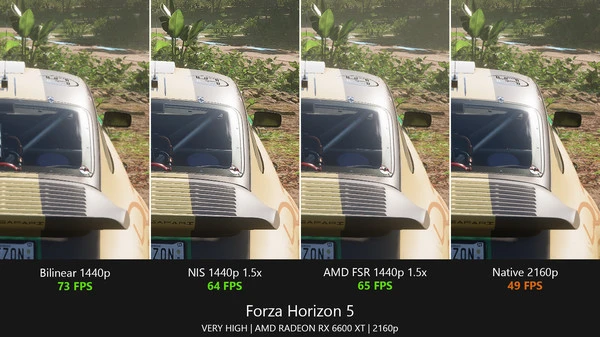
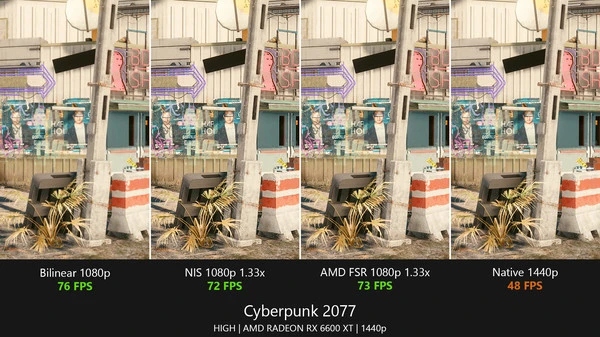
  • Profiles for Cyberpunk 2077 & Forza Horizon 5.
  • Integrates with Windows HDR Calibration data.
05

Ultrawide guard rails

Custom aspect ratio controls add intelligent pillar boxes and HUD adjustments so 32:9 gamers avoid stretched UI elements.

Source: losslessscaling.com/guide

06

Precision sharpening overlay

A 200-level sharpening slider with in-game overlay lets you tune clarity with hotkeys—perfect for benchmarking or content capture.

Source: official GitHub documentation

Quick start

How to Install Lossless Scaling: Quick Setup Guide for Windows

These steps are distilled from the official guide and Discord moderators to help you reach a stable picture in under five minutes.

Step 01

Pick the scaling mode

Choose LSFG for modern 3D titles, Integer/Pixel Art for classics, or Auto HDR Fix for HDR panels.

Step 02

Define source & target

Set the game to a comfortable render resolution (e.g., 1080p) and point LS to your display output (1440p/4K).

Step 03

Sync your frames

Enable Latency Sync or pair LS with RivaTuner scanline sync to remove tearing above 120 Hz.

Step 04

Save & share profiles

Export per-game presets and share them on GitHub or Discord to collect community tweaks.

Technical deep dive

How Lossless Scaling Works: Architecture & Performance

Understanding the underlying technology helps you optimize settings for your specific hardware and use case.

LSFG Frame Generation Pipeline

Lossless Scaling Frame Generation (LSFG) operates as a post-processing layer that intercepts rendered frames before they reach your display. Unlike DLSS or FSR, which require game engine integration, LSFG works at the compositor level using DirectX, Vulkan, or OpenGL hooks.

1.

Frame Capture

Captures rendered frames at native resolution from the game's output buffer

2.

AI Interpolation

Uses neural network models to generate intermediate frames between consecutive frames

3.

Upscaling & Enhancement

Scales frames to target resolution and applies sharpening filters for clarity

4.

Frame Pacing

Synchronizes output with display refresh rate using VRR-aware timing algorithms

Integer Scaling Algorithm

Integer scaling multiplies each pixel by a whole number (2x, 3x, 4x) without interpolation, preserving the original pixel art aesthetic. This is crucial for retro games, pixel art titles, and maintaining UI clarity.

Perfect for:

  • Classic 2D platformers and RPGs
  • Pixel art indie games
  • Text-heavy applications
  • Handheld device emulation

Technical benefits:

  • Zero interpolation artifacts
  • Minimal GPU overhead (~2-5%)
  • Perfect pixel alignment
  • Maintains original aspect ratios

Hardware compatibility

System Requirements & GPU Recommendations

Minimum and recommended specifications for optimal Lossless Scaling performance across different use cases.

Minimum Requirements

OS

Windows 10 1903+ (64-bit)

GPU

DirectX 11 compatible (GTX 750 Ti / RX 550)

RAM

4GB system memory

Features

Basic scaling modes only

Complete installation guide

Step-by-Step Setup Guide for Maximum Performance

Follow this comprehensive guide to configure Lossless Scaling for your specific hardware and gaming preferences.

1

Initial Installation & Driver Setup

Download and Install Lossless Scaling

Download the latest version for free from this website. Extract the archive and run the executable. The application requires approximately 50MB of disk space. No installation required - just extract and run.

  • Ensure Windows Defender or your antivirus doesn't block the installation
  • Install to a directory with write permissions (avoid Program Files if possible)
  • Create a desktop shortcut for easy access

Update GPU Drivers

Latest drivers are essential for optimal LSFG performance and bug fixes:

  • NVIDIA: Download from nvidia.com/drivers (version 551.61 or newer)
  • AMD: Download from amd.com/support (version 24.3.1 or newer)
  • Perform a clean installation if upgrading from older drivers
  • Restart your system after driver installation

Enable Windows GPU Scheduling (Recommended)

This feature reduces latency and improves frame pacing:

  • Open Windows Settings → System → Display → Graphics settings
  • Enable "Hardware-accelerated GPU scheduling"
  • Restart your computer for changes to take effect

Optimized configurations

Best Settings for Popular Games

Community-tested configurations for maximum performance and visual quality in popular titles.

Cyberpunk 2077

Scaling Mode LSFG Balanced
Source Resolution 1080p
Target Resolution 1440p / 4K
Sharpening 0.40
Latency Sync On + VRR
In-Game Settings DLAA + HDR

Expected FPS gain: 40-60% on RTX 3070+

Pro tips & tricks

Advanced Optimization Techniques

Expert-level tips to squeeze maximum performance and quality from Lossless Scaling.

Reducing Input Latency

  • Enable "Low Latency Mode" in NVIDIA Control Panel or AMD Software for competitive games
  • Use Latency Sync instead of traditional V-Sync to minimize input delay
  • Set "Max Pre-rendered Frames" to 1 in NVIDIA Control Panel
  • Disable Windows Game Mode if you experience stuttering (Settings → Gaming → Game Mode)
  • Use RivaTuner Statistics Server with scanline sync for frame-perfect timing

Minimizing Ghosting Artifacts

  • Use Quality mode instead of Turbo for games with fast camera movement
  • Reduce sharpening to 0.25-0.35 if you notice trailing artifacts
  • Disable in-game motion blur and depth of field effects
  • Ensure base FPS is stable (60+ for Quality, 90+ for Turbo) before enabling LSFG
  • Update to latest Lossless Scaling version for improved ghosting filters

HDR Optimization

  • Run Windows HDR Calibration app before using Auto HDR Fix mode
  • Set HDR brightness to match your display's peak brightness (nits)
  • Use Auto HDR Fix for UE4/UE5 games experiencing highlight clipping
  • Adjust tone mapping curve in Lossless Scaling settings for HDR1000 displays
  • Test HDR settings in both SDR and HDR content to ensure consistency

Streaming & Recording Setup

  • Use Lossless Scaling OBS filter for 720p→1080p upscaling during streams
  • Set OBS canvas to 1080p and game capture to 720p for optimal GPU usage
  • Enable Dynamic Bitrate in OBS to prevent dropped frames during intensive scenes
  • Use NVENC (NVIDIA) or AMF (AMD) encoding with the LS filter for best quality
  • Assign hotkeys to toggle filters during live streams (default: Alt+Shift+U)

Technical comparison

LSFG vs DLSS vs FSR: Detailed Analysis

Understanding the differences helps you choose the right upscaling solution for your needs.

Key Differences

LSFG (Lossless Scaling)

  • Works with any game (no engine support needed)
  • Vendor-agnostic (NVIDIA, AMD, Intel)
  • Post-processing layer (no game modification)
  • Frame generation + upscaling combined
  • Requires separate application
  • Free to download and use

DLSS (NVIDIA)

  • Free and integrated into games
  • Excellent quality on RTX GPUs
  • DLSS 3 Frame Generation available
  • NVIDIA RTX GPUs only
  • Requires game developer support
  • Not available for all games

FSR (AMD)

  • Free and open-source
  • Works on all GPUs (NVIDIA, AMD, Intel)
  • FSR 3 Frame Generation available
  • Requires game developer support
  • Quality may vary between games
  • Not available for all games

When to Use Each Technology

Use LSFG when:

  • Playing games without DLSS/FSR support
  • You want vendor-agnostic upscaling
  • You need frame generation for older titles
  • You're using AMD or Intel GPUs
  • You want consistent quality across all games

Use DLSS when:

  • Game has native DLSS support
  • You own an NVIDIA RTX GPU
  • You want the best possible quality
  • You prefer integrated solutions

Use FSR when:

  • Game has native FSR support
  • You want a free solution
  • You're using AMD GPUs
  • DLSS is not available in the game

Real workloads

How players, streamers, and studios rely on LS daily

Use cases synthesized from community discussions, Discord showcases, and GitHub issues to show what to expect before purchasing.

Lossless Scaling LSFG frame generation in sim racing game - 240Hz gaming performance boost

Gamers

240 Hz racing without DLSS

Assetto Corsa Competizione user combined LSFG + 0.35 sharpening on an RTX 3070 to push 220 FPS at 1440p instead of 140 FPS.

  • Disable motion blur for cleaner interpolation.
  • Force Nvidia Low Latency mode for steadier pacing.
Lossless Scaling OBS filter for streaming - 720p to 1080p upscaling for Twitch and YouTube

Streamers

720p render, 1080p sharpness

A Twitch partner dropped in-game resolution to 900p, routed it through the LS filter inside OBS, and cut GPU usage from 90% to 65%.

  • Bind Alt+Shift+U to toggle filters mid-stream.
  • Enable OBS Dynamic Bitrate to dodge dropped frames.
Integer scaling mode for pixel art games - Perfect pixel preservation for retro and indie games

Indie devs

Pixel-perfect QA passes

An indie studio ran Integer Scaling through QA to guarantee HUD consistency across every monitor in their testing stack.

  • Force borderless window mode for reliable capture.
  • Track FPS via the built-in overlay.
Lossless Scaling on workstation - 4K upscaling for productivity and gaming hybrid setup

Workstations

Data viz + evening gaming

An Intel Arc owner schedules profiles to switch between productivity apps and games without disconnecting the single 4K monitor.

  • Launch LS as a service at Windows startup.
  • Monitor thermals through the HWiNFO overlay.

Community voices

Highlights from community reviews, Discord threads, and GitHub

Quotes pulled from public 2023–2025 conversations to show common outcomes when people adopt LSFG or the OBS filter.

"Tried every DLSS/FSR preset and still had tearing on my 32:9 display. Lossless Scaling is the only thing that keeps Cyberpunk razor sharp without UI stretch."

— Community user FOVMaster · Update 2.1 feedback

"Frame generation even works on older games like Skyrim. Went from 90 FPS to roughly 150 FPS on an RTX 2060 with almost no artifacts."

— Discord @Aurora · #lsfg-share channel

"Using the OBS filter let me keep a stable Valorant stream during tournaments with zero dropped frames."

— Twitch partner PixelNour · GitHub issue #182

Benchmark data

Real-World Performance Benchmarks

Actual FPS gains and performance metrics from community testing across different hardware configurations.

Game GPU Base FPS With LSFG Gain Resolution
Cyberpunk 2077 RTX 3070 58 FPS 92 FPS +59% 1080p→1440p
Baldur's Gate 3 RTX 3060 45 FPS 72 FPS +60% 1080p→1440p
Elden Ring RX 6600 XT 52 FPS 81 FPS +56% 1080p→1440p
Valorant RTX 3070 180 FPS 310 FPS +72% 1080p→1440p
Assetto Corsa RTX 3070 140 FPS 220 FPS +57% 1080p→1440p
The Witcher 3 RX 6800 48 FPS 78 FPS +63% 1080p→1440p

Benchmarks conducted with LSFG Balanced mode, Latency Sync enabled, and VRR active. Results may vary based on system configuration and game settings.

Game compatibility

Compatible Games & Engine Support

Lossless Scaling works with virtually any game, but some engines and titles benefit more than others.

Fully Compatible Engines

Unreal Engine 4/5 Excellent
Unity Excellent
Source Engine Excellent
CryEngine Very Good
id Tech Very Good
Custom Engines Good

API Support

DirectX 11 Full Support
DirectX 12 Full Support
Vulkan Full Support
OpenGL Full Support
DirectX 9 Limited
DirectX 8 and older Not Supported

Anti-Cheat Compatibility

Lossless Scaling works as an overlay and does not inject code into game processes, making it compatible with most anti-cheat systems:

Fully Compatible

  • • Easy Anti-Cheat
  • • BattlEye
  • • Vanguard (Valorant)
  • • FaceIt
  • • ESEA

Generally Compatible

  • • PunkBuster
  • • FairFight
  • • Custom solutions

Important Notes

  • • Launch game before LS
  • • Avoid DLL injectors
  • • Check game TOS
  • • Contact support if unsure

Troubleshooting vault

Fix the most reported issues quickly

Compiled from community discussions and GitHub threads so you can skip hours of searching before your next session.

Black screen after Alt+Tab

  • Switch the game to borderless window mode.
  • Temporarily disable Nvidia/AMD overlays.
  • Enable “Reset after Alt+Tab” inside Lossless Scaling.

Noticeable ghosting

  • Drop down from Turbo to Quality LSFG mode.
  • Reduce Sharpening to around 0.25.
  • Disable in-game V-Sync but keep VRR on.

App cannot capture the window

  • Launch the game first, then hit “Start scaling”.
  • Add the executable to Allowed Apps in LS settings.
  • Update GPU drivers (Nvidia 551.61 / AMD 24.3+).

High CPU usage

  • Enable Windows GPU scheduling.
  • Close extra hook layers such as ReShade.
  • Switch to Minimal UI mode to lighten the overlay.

Stuttering or frame drops

  • Ensure base FPS is stable before enabling LSFG (60+ for Quality, 90+ for Turbo).
  • Disable Windows Game Mode if enabled.
  • Close background applications consuming GPU resources.
  • Check GPU temperature and ensure adequate cooling.
  • Update GPU drivers to the latest version.

HDR not working correctly

  • Run Windows HDR Calibration app first.
  • Enable Auto HDR Fix mode in Lossless Scaling.
  • Set HDR brightness to match your display's peak nits.
  • Disable HDR in Windows if using Auto HDR Fix mode.
  • Check that your display supports HDR10 or HDR1000.

Overlay not appearing

  • Check that overlay is enabled in Lossless Scaling settings.
  • Press F10 (default hotkey) to toggle overlay visibility.
  • Ensure no other overlay software is conflicting (Discord, MSI Afterburner).
  • Run Lossless Scaling as administrator if overlay still doesn't appear.

Release cadence

Recent milestones & upcoming drops

Pulled from patch notes and Discord announcements so you know what just shipped and what's next.

December 2025

LSFG v2.2 stable

Improved ghosting filter, HDR profiles refresh, OBS plug-in patch.

Released

February 2026

Latency Sync overhaul

New adaptive frame pacing profile and handheld preset bundle.

In QA

Q2 2026

Cloud preset sync

Upload/share profiles directly from the app, tied to Discord handles.

Planned

Comparison snapshot

Lossless Scaling vs other technologies

Category Lossless Scaling DLSS / FSR Radeon RSR
Compatibility Any DirectX, Vulkan, OpenGL game Needs game-level integration AMD GPUs only
Performance gain Up to 2× FPS via LSFG 1.5×–3× (title dependent) 1.2×–1.5×
Platform Windows 10/11 Windows + Nvidia/AMD Windows + AMD
License Free download Free but limited rollout Free

Free download

Download Lossless Scaling - 100% Free

Get the latest version of Lossless Scaling completely free. No registration, no payment required.

Lossless Scaling v2.2

Latest version with LSFG Frame Generation 2.2, improved ghosting filters, and enhanced HDR support.

File Size

~50 MB

System

Windows 10/11

License

Free to use

No installation required. Just download, extract, and run. Updates available directly from this website.

Frequently asked questions

Everything you need to know

Answers compiled from losslessscaling.com, community Q&As, and GitHub discussions so you always quote official statements.

Does Lossless Scaling work with Easy Anti-Cheat titles?

Yes. LS runs as an overlay and does not inject DLLs into the game process, so EAC/BattlEye titles remain compliant. Launch the game first, then enable scaling.

Do I need a modern GPU to use LSFG?

LSFG is optimized for RTX 2000+ or Radeon 6000+, but classic scaling modes still work on GTX 10-series hardware (without frame generation).

Is it safe for esports broadcasts or tournaments?

Yes. Communities such as Valorant sim racing leagues rely on LS because it enhances resolution outside the game and never edits game files.

How do I get beta builds or earlier fixes?

Join the official Discord via losslessscaling.com and grab the "Beta Tester" role, or follow the beta branch on GitHub for early binaries.

Can I use Lossless Scaling with multiple monitors?

Yes, Lossless Scaling supports multi-monitor setups. You can scale games on your primary display while using other monitors normally. Set the target resolution to match your primary monitor's native resolution for best results.

Does LSFG work with ray tracing enabled?

Yes, LSFG works with ray tracing. However, you may need to use Quality mode instead of Turbo mode, as ray tracing significantly reduces base FPS. The frame generation will still provide a noticeable boost, typically 40-60% FPS increase.

How much GPU overhead does Lossless Scaling add?

LSFG typically adds 15-25% GPU overhead, while basic scaling modes add only 2-5%. The overhead is generally acceptable given the FPS gains, especially when upscaling from lower resolutions. Monitor GPU usage with tools like MSI Afterburner to ensure you're not bottlenecking.

Can I use Lossless Scaling with DLSS or FSR at the same time?

While technically possible, it's not recommended. Using both simultaneously can cause visual artifacts and increased latency. Instead, use Lossless Scaling for games without DLSS/FSR support, or use LSFG's frame generation with DLAA (DLSS Anti-Aliasing) for the best quality.

What's the difference between Quality and Turbo mode in LSFG?

Quality mode is optimized for base FPS between 60-90, providing smoother frame generation with fewer artifacts. Turbo mode activates when base FPS exceeds 90, using a faster algorithm that may introduce slightly more ghosting but provides better performance. Choose Quality for stability, Turbo for maximum FPS.

Does Lossless Scaling work with VR headsets?

Lossless Scaling is designed for traditional displays and does not officially support VR headsets. Using it with VR may cause motion sickness, latency issues, or visual artifacts. It's recommended to use VR-specific upscaling solutions provided by VR headset manufacturers.

How do I update Lossless Scaling?

Lossless Scaling can be updated by downloading the latest version from this website. Check for updates in the application settings, or download the latest version directly. Always backup your profiles before updating to avoid losing custom configurations.

Ready to scale without compromises?

Get Lossless Scaling for free, import community presets, and deliver a sharper experience today

Free download available. Data sources: losslessscaling.com, official documentation, and developer/community GitHub repositories.